

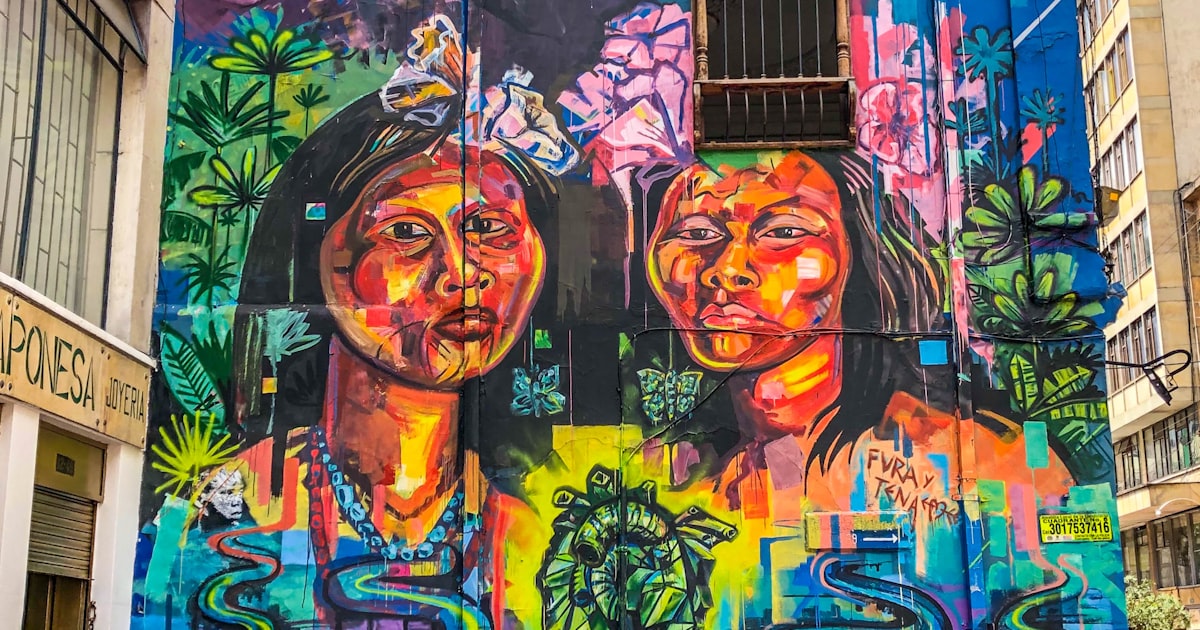
Medellín’s street art is inseparable from its history: the murals in Comuna 13 grew out of hip-hop collectives painting a neighborhood’s grief and recovery after the 2002 military operations, and the city has since turned muralism into policy, commissioning macro-murals across the comunas. This guide tells you where the art actually is — Comuna 13 first, then Manrique, the center and the newer districts — who paints it, and how to see it with or without a guide.
Comuna 13: the escalator route
The murals along the outdoor escalators in barrio Las Independencias (opened December 2011) and the streets around them are the densest concentration of street art in Colombia. The recurring images — elephants (memory), women’s faces, doves, the white cloths residents waved during Operación Orión in October 2002 — belong to a local vocabulary the graffiti collectives (Casa Kolacho and its Graffitour among the first) developed to tell the story to outsiders. Pieces change constantly; walls are repainted, and artists from Chile, Mexico and Europe add work during festivals. Metro Line B to San Javier, then a feeder bus or short taxi. Free; guides for tips. Our Comuna 13 guide covers etiquette and history, and the tours comparison ranks the walks.
Manrique: the Constelaciones macro-mural
In Comuna 3, the city’s Constelaciones project painted dozens of facades along the hillside streets into a single composition promoted as the largest mural in Medellín — best seen from the street below and from the Casa Museo Gardeliana side of the barrio. There is no cable line; go with a guided mural or tango tour, or by taxi in daylight. See the Manrique section of the comunas guide.
Downtown and the creative districts
- El Perpetuo Socorro — the former industrial district south of the center that the city rebranded as a creative district; warehouses, studios and commissioned murals, plus cafés and bars that open on weekends. Walkable from Industriales station by day.
- Barrio Prado and the center — murals on the tram corridor (Tranvía de Ayacucho) and around the Parque del Periodista; the Centro guide covers the daytime walk.
- Moravia — community murals on the reclaimed-dump barrio behind the Universidad station, seen with a community guide.
Seeing it with a guide
Comuna 13’s murals mean more with someone who grew up there explaining them, which is why the graffiti tour with street food (from $21, 3 h, 9,100+ reviews) is the most-booked experience in the city. The full-day city + Comuna 13 tour adds the center. For Manrique and the newer districts, ask the hostels and the Museo de Antioquia’s education desk about current mural walks; operators change season to season.
Photographing it
Morning light is flat and good for the walls in Comuna 13; late afternoon is warmer but the escalators are packed. Ask before photographing people and tip the crews who perform. Our photography guide has the rest of the city’s spots.
FAQ
Where is the best street art in Medellín? Comuna 13’s escalator route, then Manrique’s Constelaciones and the Perpetuo Socorro district.
Is Comuna 13 graffiti free to see? Yes; guides work for tips and the tours are inexpensive.
Sources: Alcaldía de Medellín (Constelaciones, Perpetuo Socorro), Casa Kolacho/Graffitour, El Colombiano; checked August 2026.
